A second set of rental rules in Ontario are set to take effect Sept. 21. Here is a link to Ontario Tribunals Page with information on the changes. The same information is presented here by the

Dated: March 3 2023
Views: 109
Photo courtesy Unsplashed, Larkin Hammond
Recently, a client wanted to discuss purchasing a pre-construction condo that they planned to live in. I gave it some thought and did some research on recent trends. Everything indicates that while pre-constructions may be great for some investors, someone looking for a condo to call home, should focus on resell condos.
Before getting into reasons why, let's look at some numbers.
In February 2023, the Canadian Housing Statistics Program (CHSP) released a study on investors’ share of the condo market (based on 2020 numbers). In Ontario, they found 41.9% of condo owners were investors. That number went as high as 95% in smaller communities such as Woodstock. It was headline grabbing news but there is more to this story.
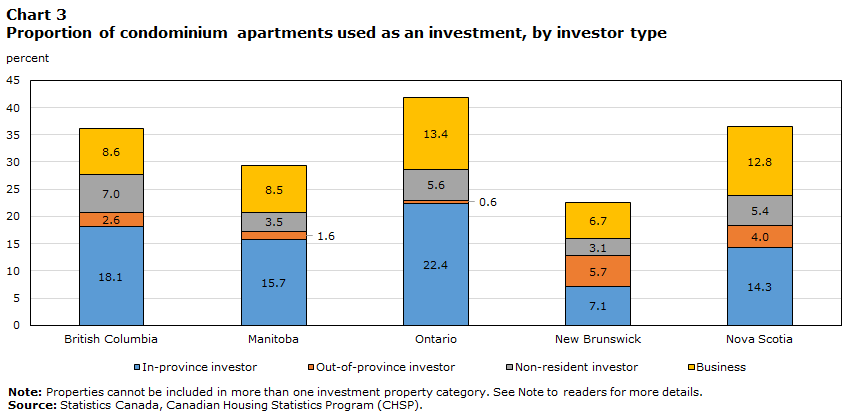
The CHSP study didn’t provide percentages on pre-construction ownership and I wanted to dig a bit deeper into this. In a Toronto Star article, Ron Butler, a mortgage broker at Butler Mortgages, estimated the percentage of investors buying pre-construction units at about 80%.
These numbers indicate that non-tenant investors drive preconstruction builds while people wanting to live in condos (end-users) are hesitant to buy into preconstruction condos.
Time can be a big obstacle. After getting appropriate permits, it can take up to 5 years for a condo project to get built. There can be delays to closing dates (for which you can receive compensation) and condos sometimes don’t even get built (but you are entitled to the return of your deposit). A quick but important sidebar here: Ensure any pre-construction project you are looking at is registered with Tarion to ensure you are protected from delays and project cancellations.
Let's break down things down a bit more. There are some important dates in pre-construction timelines that are important to pay attention to. The Firm Occupancy Date is the agreed upon date your condo will be available for occupancy. It will be in your contract with a builder or deverloper. If this date isn’t met, you are entitled to delayed occupancy compensation. The Outside Occupancy Date is the latest date that your builder agrees to let you live in the condo unit (if the builder misses this date, you have a 30-day period in which to terminate your agreement and get your deposit back). Review this page on the Tarion website for more information.
Once you get occupancy, the condo still isn’t necessarily yours. Ownership isn’t possible until the development is completed and registered. That means you can’t secure your mortgage or start making payments. This time between occupancy and Closing Date is called the Interim Occupancy. In this period you pay the developer to live in the condo (that isn’t quite yours yet).The fee is based on the unpaid balance of the purchase price of your condo, an estimate on the municipal taxes for your unit, and a projected common expense contribution. Interim Occupancy can last months or over a year.
This can all be annoying but also very troublesome. A buyer could be put in a very tight spot if they signed their agreement when mortgage rates were lower (say February, 2022 when the Bank of Canada rate was .5%) than when they got final closing on their unit (say February, 2023 when the rate was 4.5%). If the buyer had banked on rates remaining low, then they may not have budgeted for this steep interest reate increase. The rate increase can change mortgage payments and payback schedules. You have likely read about this in various articles about people unable to afford their mortgage payments or or even being unable to secure a mortgage.
A buyer really needs to assess how ready they are to accept delays and the repurcussions of these delays when buying pre-construction condos..
Pre-construction buyers also need to look at how much money they have on hand to make a down payments.
Pre-construction usually requires higher downpayments and deposits than resale condos. For resell condos, the minimum down payment is 5% of purchase price that is $500,000 or less, 10% of portion over $500,000 and 20% of a purchase price of $1 million or more. So, for a $750,000 condo your minimum down payment is $50,000. For pre-construction condos you usually pay $5,000 to $10,000 (depending on price point) upon signing. Balance of 5% at the 30 day mark, and additional 5% at 90 days, another 5% at 180 days and 5% on occupancy. So, for the same $750,000 you will have made a deposit of $150,000 upon occupancy. That’s a far cry for from the $50,000 needed for a resale condo.
Home purchase price | Minimum down payment |
$500,000 or less | 5% of the purchase price |
$500,000 to $999,999 | 5% of the first $500,000 of the purchase price; 10% of the portion of the purchase price above $500,000 |
$1 million or more | 20% of the purchase price |
Ok, let's move on to an issue that can really upset owner-occupants of pre-construction condo. As the song says: "You can't always get what you want." Floor plans for pre-construction condos can change dramatically from the planning stage to the finished product. A support pole can end up in the middle of your living room (“Help I have a pole in my dining room”). A sink may end up on a different wall. Dimensions can change. Your bedroom might not fit a king-size bed anymore. Fixtures can also change. Usually, builders’ lengthy agreements have clauses which allow for these changes. And, to be fair, they face a lot of challenges on their ends when it comes to supply lines and availability.
This may not be a big worry for an investor who is more concerned with rental and resell value but an owner-occupant may be crushed by not having a marble vanity with brushed gold fixtures.

Photo courtesy Unsplashed
I want to flag the complexities of pre-construction condo agreements. The contract you sign has been written by the developers' team of lawyers. They are lengthy and complex. You need a lawyer with knowledge and experience with pre-construction deal. For resell condos, an Agreement for Purchase and Sale, is a relatively straightforward contract used throughout Ontario. A trustworthy lawyer is essential for resale condos, but the terms are much more digestible.
I want to leave you with something a real estate agent told me once: "When you buy a pre-construction condo, you're buying a dream and a floor plan."
I'm all for dreaming but when it comes to the biggest investment you may make in your life, I prefer reality.
Always research the development company you are working with. There are many excellent companies but some are not.
First Time Home Buyer Incentive:
https://www.cmhc-schl.gc.ca/en/consumers/home-buying/first-time-home-buyer-incentive
Home Buyer’s Guide:
https://www.cmhc-schl.gc.ca/en/consumers/home-buying/buying-guides/home-buying
Homebuying Step by Step: Your guide to buying a home in Canada
Check to see if you are financially ready to own a home:

I’m very excited to be partnering with Bosley Real Estate to provide you with the exceptional, professional representation you need to protect and promote your best interests. Bosley Real Estate....
A second set of rental rules in Ontario are set to take effect Sept. 21. Here is a link to Ontario Tribunals Page with information on the changes. The same information is presented here by the
Canada’s federal ban on foreign homebuyers is scheduled to expire January 1, 2027. With the deadline approaching, the government has yet to confirm whether it plans to extend the restrictions
According to recnt numbers from the Toronto Regional Real Estate Board (TRREB), Toronto home prices continued to soften in July, but the bigger story may not be the decline in prices. It may be what
For the first time in five years, average home prices in the Greater Toronto Area have slipped below the $1 million mark — a meaningful psychological and financial milestone that signals a
Should you require assistance in navigating our website or searching for real estate, please contact our offices at 416-322-8000.
 Toronto Real Estate Board (TRREB); All information deemed reliable but not guaranteed. All properties are subject to prior sale, change or withdrawal. Neither listing broker(s) or information provider(s) shall be responsible for any typographical errors, misinformation, misprints and shall be held totally harmless. Listing(s) information is provided for consumer's personal, non-commercial use and may not be used for any purpose other than to identify prospective properties consumers may be interested
in purchasing. The data relating to real estate for sale on this website comes in part from the Internet Data Exchange program of the Multiple Listing Service. Real estate listings held by brokerage firms other than Bosley Real Estate Ltd. may be marked with the Internet Data Exchange logo and detailed information about those properties will include the name of the listing broker(s) when required by the MLS. Copyright ©2026 All rights reserved.
Last Updated: September 24, 2026 3:02 PM UTC
Show More...
Toronto Real Estate Board (TRREB); All information deemed reliable but not guaranteed. All properties are subject to prior sale, change or withdrawal. Neither listing broker(s) or information provider(s) shall be responsible for any typographical errors, misinformation, misprints and shall be held totally harmless. Listing(s) information is provided for consumer's personal, non-commercial use and may not be used for any purpose other than to identify prospective properties consumers may be interested
in purchasing. The data relating to real estate for sale on this website comes in part from the Internet Data Exchange program of the Multiple Listing Service. Real estate listings held by brokerage firms other than Bosley Real Estate Ltd. may be marked with the Internet Data Exchange logo and detailed information about those properties will include the name of the listing broker(s) when required by the MLS. Copyright ©2026 All rights reserved.
Last Updated: September 24, 2026 3:02 PM UTC
Show More...